
Picnic
Determined to see snow again, we took our children up to the Midlands in winter, for a picnic in a blizzard.

This is a sneak preview, a chapter from the third book in the Apple Island Wife series. Enjoy! And if you do enjoy, subscribe - it’s FREE!
This post also contains audio of me reading it.
After sweltering in Brisbane for seven years, Oliver and I were longing to see snow again. Every winter, Tasmania obliged. From close to where we lived, we could see the snow capped heights of Ben Lomond, and the Western Tiers, the band of rocky escarpments forming the edge of Tasmania’s midlands plateau. The Aboriginal name given to them, kooparoona niara, means Mountains of the Spirits.
Our children had only ever seen snow in story books and Disney films with ladies dressed badly for the weather in velvet dresses. They were ecstatic at the prospect of seeing the real thing. The trouble was, their wardrobe only kitted them out for summer, with a few woolly layers added for the winter months. Since I was a stay-at-home mum, we didn’t want to buy garments for wet and snowy conditions which they would grow out of in one season. So I trawled the charity shops and assembled a collection of mismatched anoraks, waterproof trousers and gum boots. We would look like human rainbows, but we’d be dressed more appropriately than the Disney princesses.
Driving through the farmland of northern Tasmania and past the settlers’ village of Westbury, we found the road which wended its way up through Golden Valley into the mountains. One hairpin bend after another was surrounded by thick forest, the excitement in the car quieting for a time as we all concentrated on not feeling sick from the car’s motion. Gradually the trees fell away and horizons became visible again. On either side of the road were tussocks of grass over rocky terrain, and in the distance the stony faces of the Tiers, grey and craggy.
Suddenly there was snow on the side of the road. Daisy, at four years old, was ready for adventure and began shouting ‘Snow!’ more or less continually. After a couple more bends we came to a great plain covered in a blanket of white. We kept driving, past a couple of lakes, one with signposts advertising a walk. But we kept going, keen to find out what was up here on the Midlands plateau. The road took us down towards Great Lake, a popular destination with fishing enthusiasts and one of the world’s best spots for trout, which was introduced by early settlers but now lives wild in some of Tasmania’s waters. To house the locals and visitors who come to fish all year round were hundreds of shacks squatted at odd angles. Some were humble, ramshackle affairs, and some had clearly been worked on and built up into more substantial dwellings, timbered attractively and with stocks of firewood outside.
What we were looking for wasn’t a shack, but a nice little cafe selling cappuccinos but it quickly became evident we weren’t going to find one. There was nobody about. We decided to just stop the car wherever the fancy took us and get out to and into the snow. Oliver pulled up in a driveway shared by several shacks, where we’d be out of the way if someone else came along. Then came the lengthy business of getting out of the car, putting on the jumble of padded anoraks and trousers bought from charity shops, blowing on our hands and pulling on wellies. With occasional blustery winds buffeting the side of the car, it seemed wise to be warmly dressed before opening the doors.
The place we had stopped wasn’t the dreamiest field of snow imaginable. Snow lay on patches of ground between gravel tracks, with closed up shacks all around. Still, Daisy threw herself into the occasion. She immediately began scooping up the snow and throwing it at the rest of us, posing for photographs with a delighted grin, and building her first snowman. Kit, still a toddler, was less certain. Dressed in more clothes than he’d ever worn before including an all-in-one padded suit, he stood still for a photograph looking very unsure of things. Then he fell backwards into a shallow ditch full of snow, sitting in it and saturating himself from the backside down. Between getting out of the car and falling over, about two minutes had passed. This was the extent of the wear he got out of the his snow suit.


Once we had pelted Oliver with snowballs and screamed excitedly for a while, we hopped back into the car and returned the way we’d come, until we reached Pine Lake. A snow-covered boardwalk leading to the lake passed through pencil pines, one of Tasmania’s rarest trees, found only in the highlands. As we pulled into the car park it began to snow again.
‘Probably just a shower,’ said Oliver. ‘Let’s stop here for lunch.’
Staying in the warmth of the car, we opened up the picnic box and passed round sandwiches and crackers stuffed with creamy cheese. Outside, a sudden blizzard took place. It was a splendid show watched through the TV screens of the car windows, with flurries of snowflakes and wind swirling all around. We ate our sandwiches and oo-ed and ah-ed in wonder. Miraculously, as we finished lunch and dusted the crumbs off our jumpers, conditions cleared. We jumped out of the car again and put on all the warm, dry layers we could find in the boot. While the snow had stopped, there was still low cloud and a frigid mountain wind. We put Kit in the pram with a clear plastic cover creating a warm little capsule for him, and headed along the boardwalk.
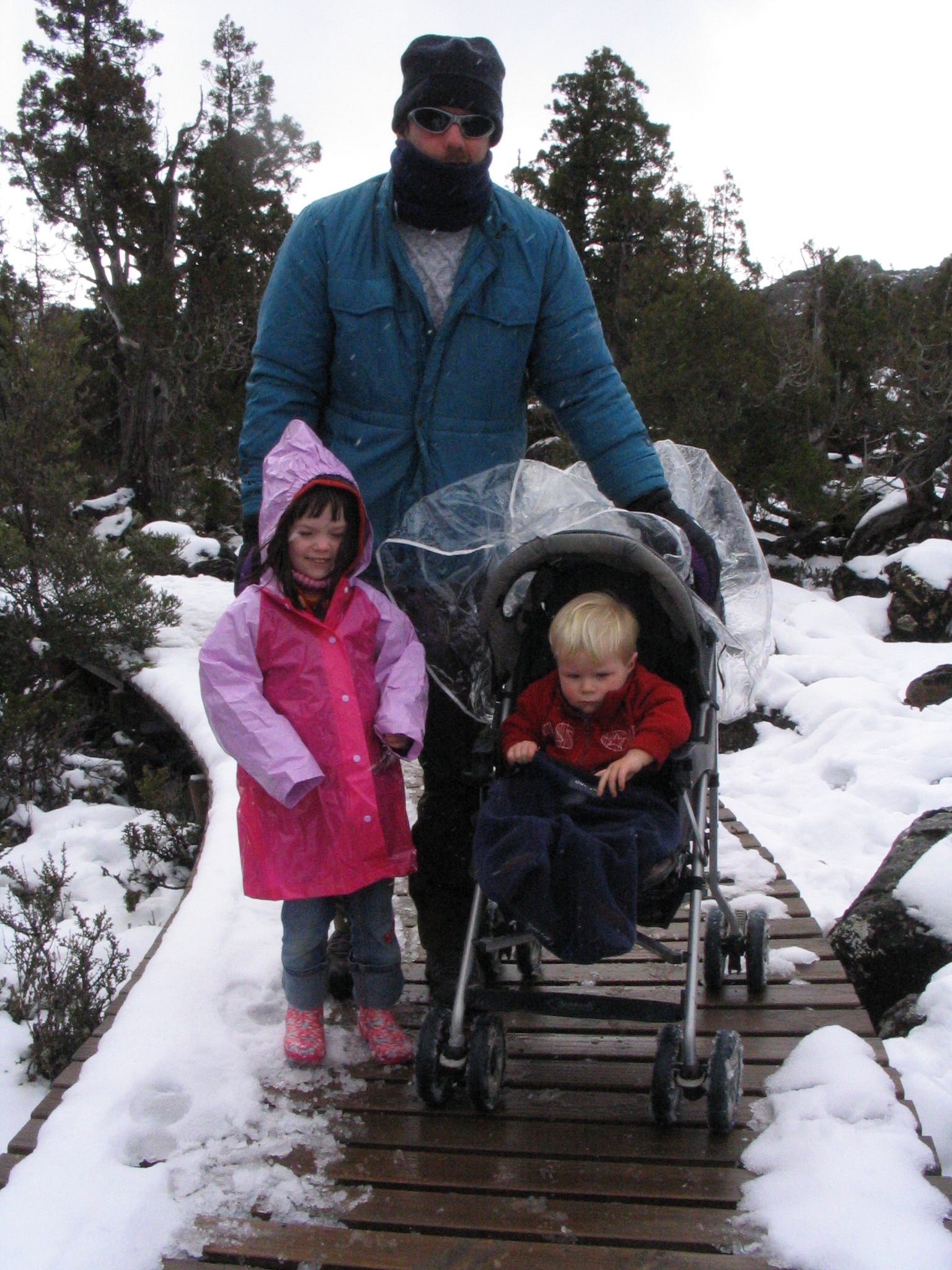
It was an austere and very Tasmanian environment. Pencil pines can survive for thousands of years but the harsh conditions on the highlands stunt their growth. Often they assume twisted shapes as if tortured by the bleakness of where they live. It’s a haunted kind of landscape. The boardwalk passed by some of these pines and over a rocky grassy plain, ending up at a lookout. Here we were directly over Pine Lake, which was frozen over with a thick layer of white ice. While we took in the frosty view, the wind whipped at our cheeks and numbed our lips. Another family was on the lookout platform, and with frozen fingers we fumbled with our cameras and took some photos for each other.
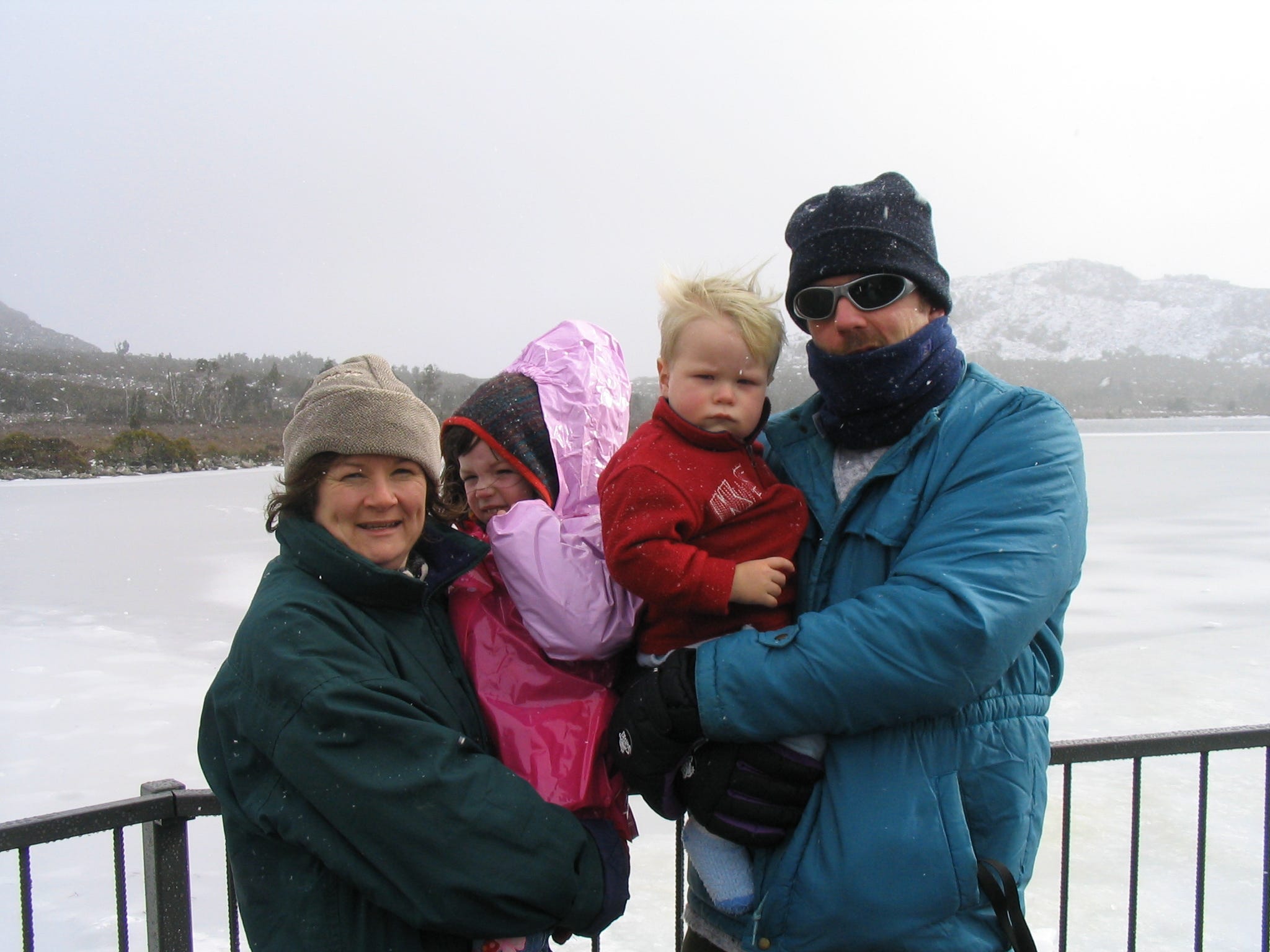
Each year I had begun using one of our family photos as a Christmas card, to give friends and relatives back home an image of us in the Tasmanian landscape. Our Pine Lake photos were an obvious choice that year, with the four of us posed against a frozen backdrop. Oliver wore sunglasses against the glare of the snow clouds, and a fleecy scarf over the rest of his face. Kit had grown very grumpy at being confined to his pram and scowled in Oliver’s arms with livid, cold cheeks. Daisy beamed beside them. Behind us lay the lake, an eery, white expanse with thick snow clouds banked up beyond.
It was a fascinating landscape for me and Oliver, but less so for the children. In such places it’s essential to stick to the boardwalk, as the terrain either side can be damaged by human footfall. Some of the native grasses take hundreds of years to recover. It’s hard for children, used to playing and exploring wherever they want, to understand such constraints. We’d also had enough of being cold.
So we got back into the car and drove back the way we had come. Dipping down into Golden Valley we left the snow clouds behind and emerged into rich sunshine and green farmland. Stopping at Westbury we parked up alongside Australia’s oldest village green. At one end there was a set of village stocks where people were taunted cruelly in a former age. Further along the green was a small playground. There we spent an hour with the children playing on swings, slides and flying foxes. We dressed Kit in a fresh jumper and warm pants and he promptly got them filthy in the woodchip of the playground, his third outfit in as many hours, but it didn’t matter.
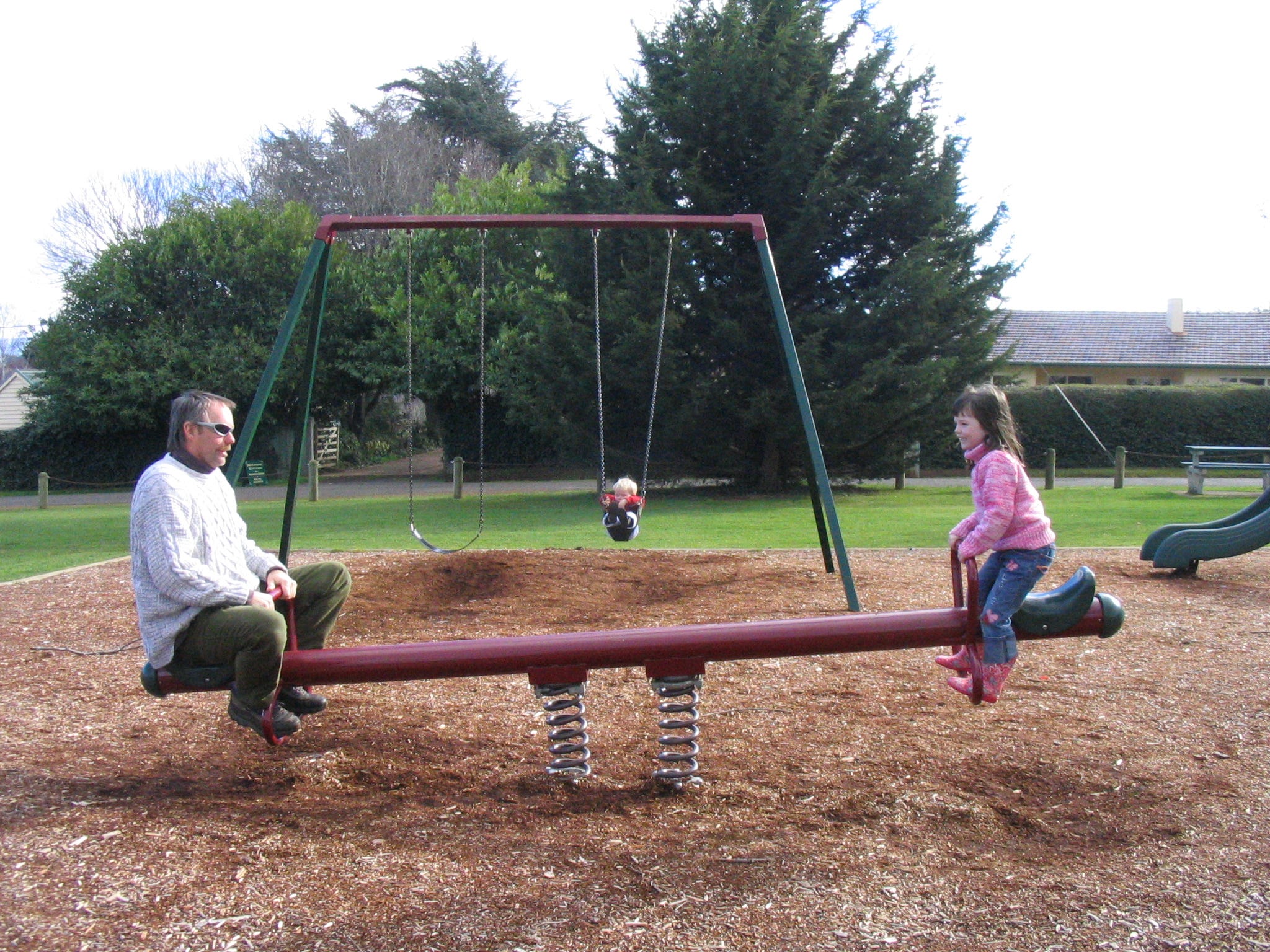
The day seemed to sum up all of what Tasmania had to offer: two different climates and two different landscapes within cooey of one another. One moment a picnic in the middle of a blizzard, the next an idyllic day in winter sun on a grassy village green. How good it was to experience seasons again.
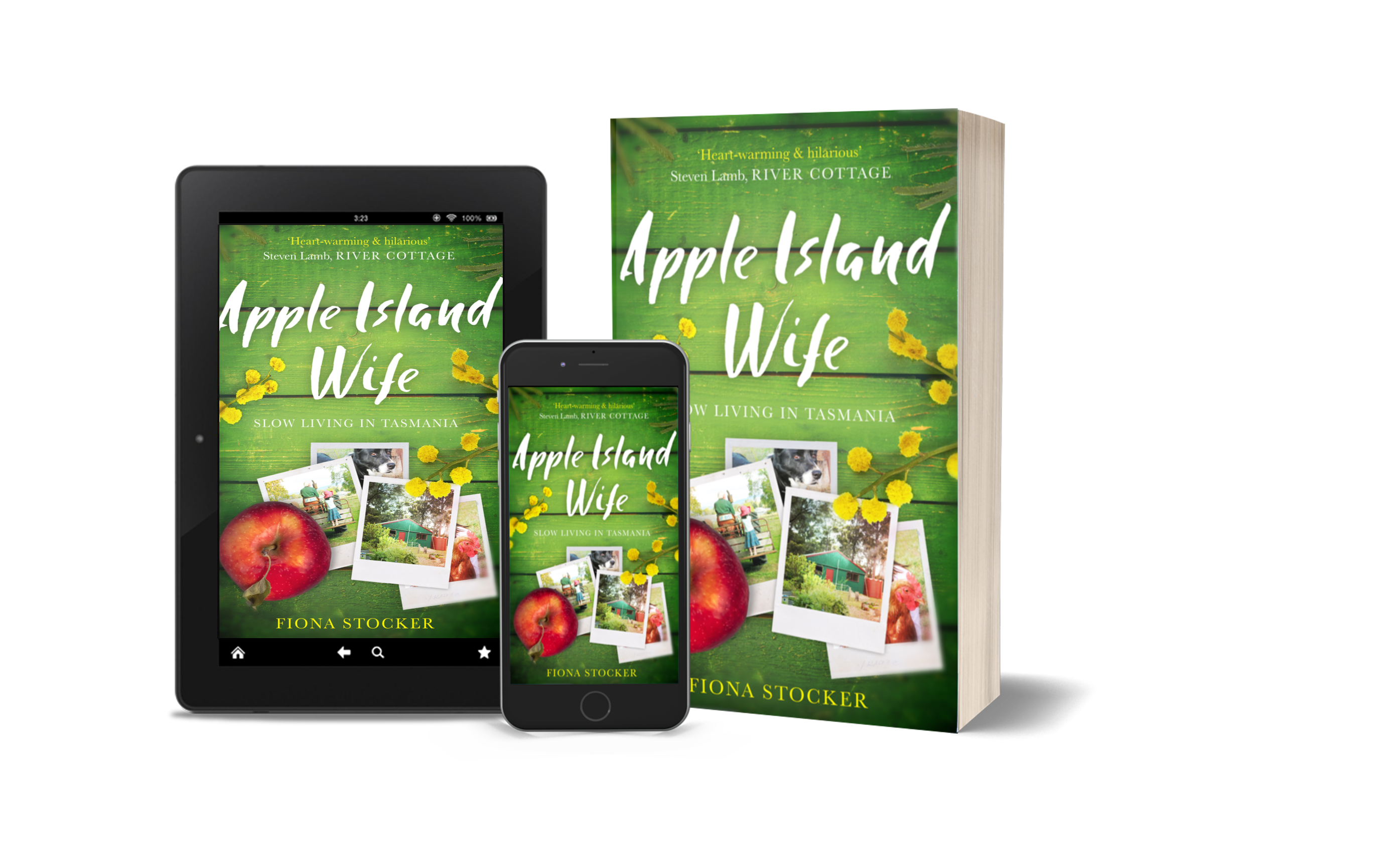
Thanks for reading. You can find my first two books in the series on Amazon.
Apple Island Wife - Slow Living in Tasmania
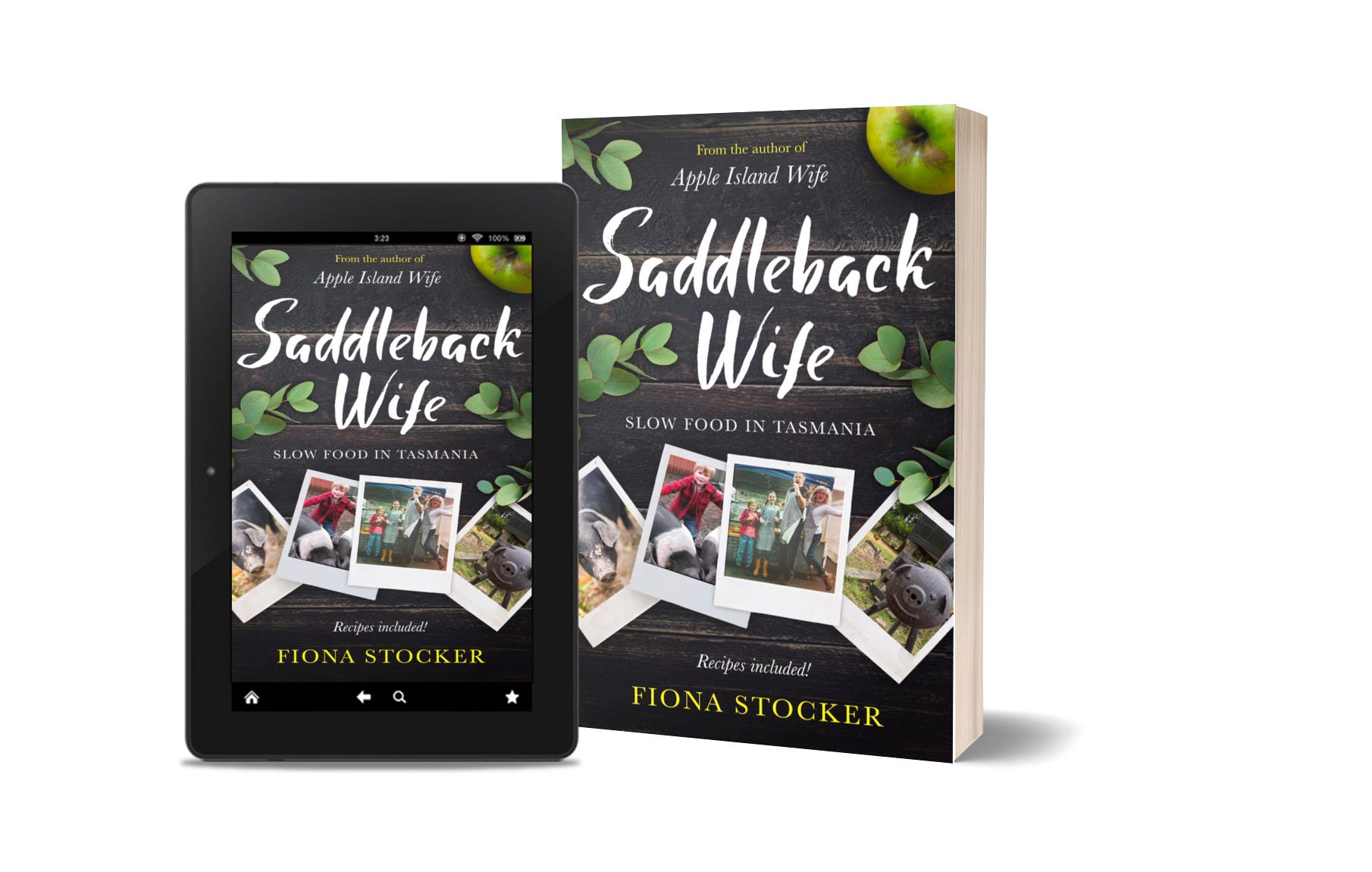
Saddleback Wife - Slow Food in Tasmania
Dear Fo.....What lovely pics of you all! xxxx